What is sensory marketing?
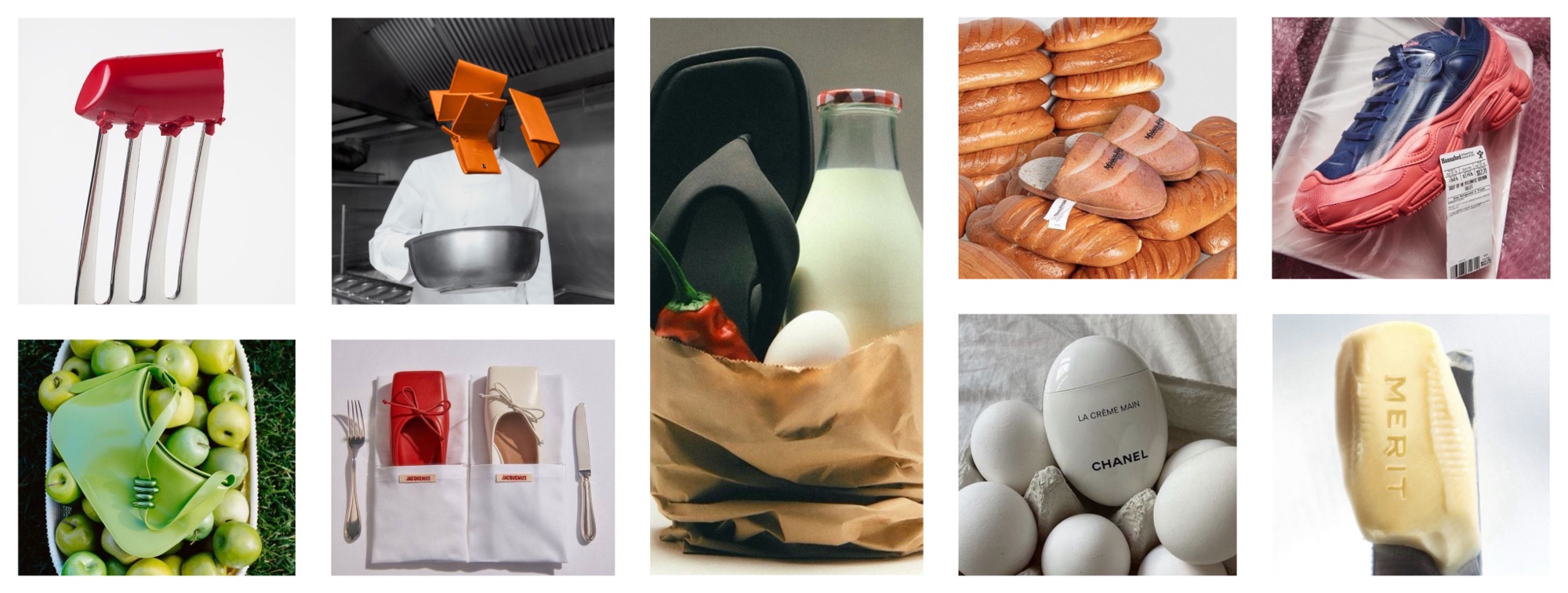
Sensory marketing is a method that seeks to create a connection between the brand and consumer through tactics that stimulate emotions, e.g. colours, location, scents and music. Although this has been an ongoing theme for years, going as far back as the ‘Too Faced Chocolate eye shadow palettes’ and “Cactus Jack x McDonalds’, we’ve been seeing food related marketing come up with popular brands more frequently such as Rhode and Jacquemus.
But why does this work? Well, we’re all aware that food can trigger a variety of emotions and different people have different relationships with food whether that’s positive or negative. There are dormant addictive consumer behaviours that can be provoked with this kind of marketing, and it becomes slightly dangerous. There’s a risk of food and buying behaviours becoming a coping mechanism rather than a joyful experience. The playfulness of marketing with food draws your attention and a sense of curiosity about a cinnamon or cherry scented product grows – which is why I have a Rhode lip gloss…
Fashion and food trends are changing all the time and a lot of it is based on aesthetics which is why you might have thought you liked matcha because it looks good on Instagram, but you weren’t a fan of the taste. People love food, people love fashion so why not merge the two right? Combination audiences are always a win.
Although it looks fun, there’s an ignorance around class disparity that is being ignored here, and no one is really speaking about it so I’ll be the woke friend.
Being amid a global cost of living crisis and thinking about the amount of food wastage that goes into these beauty and fashion campaigns whilst brands profit off this feel so wrong.
Particularly, in the US as this is where most of these big campaigns take place. With how uneasily accessible fresh fruit is to Americans like it’s cheaper the buy food that’ll shorten your lifespan than to buy some grapes and pears. There’s a theme of foods: fruit, milk, eggs, meat. Brands using fresh produce to market their luxury and high-end products then markets the product as something that comes off as fresh, replenishing and something you NEED. The symbolism is food is a necessity, now you see our product as a necessity.
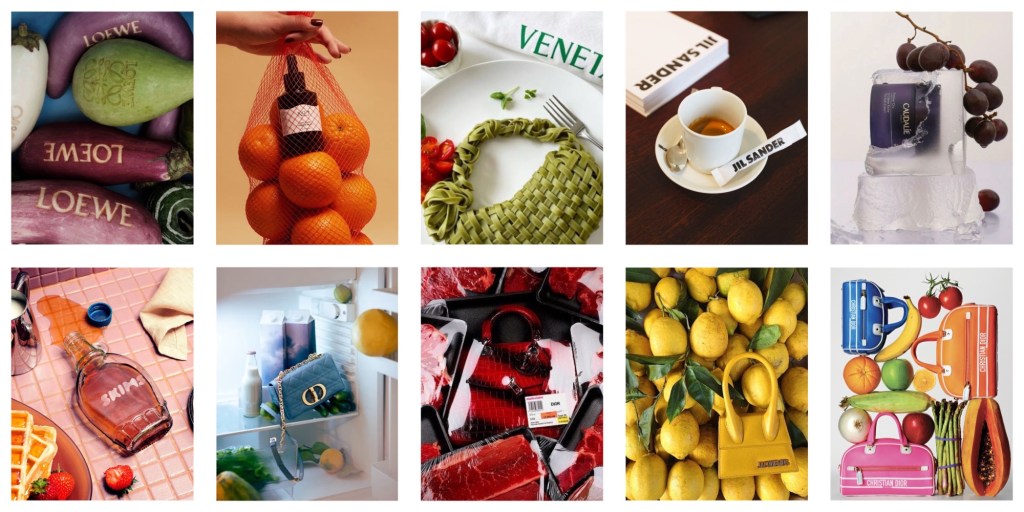
The same goes for brands that have food pop ups or food related establishments. Here I’ll use the Gucci Osteria as example. Even if you can’t afford the products, you can afford a hot chocolate or croissant. Eat and wear Gucci, eat and wear luxury. The idea that whatever you buy from the brand is elevating you as a person.
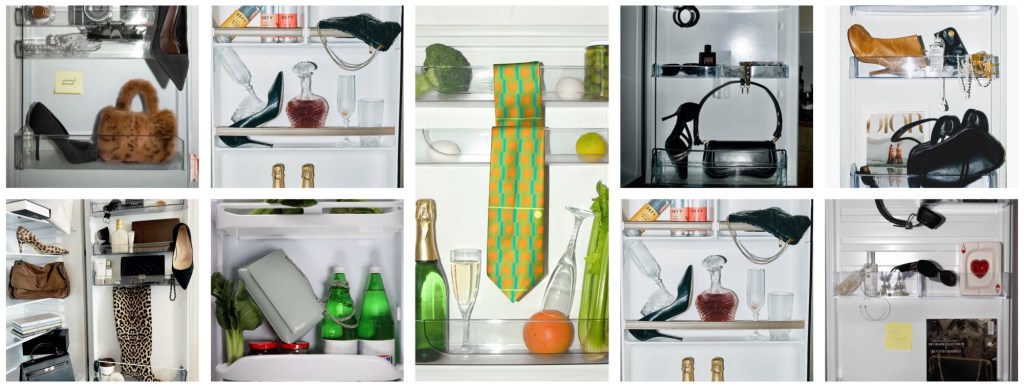
Now let’s tap into the heels and bags in fridge trend. I think the joke around preservation is quite clever and yes, it looks fun, and we both have a photo like that saved on our Pinterest. When you say it out loud heels in the fridge sounds insane yet, we’re curious and drawn to the idea. It all goes back to the psychological aspect. If you start mixing the things we need with luxury items of course we start to feel like we need them too. It’s all about getting us to feel like these products are just as essential as food, we open our fridges multiple times a day, every day, ultimately, the purpose is to make us feel like what we’re seeing is a necessity.
Good marketing is meant to evoke emotions and tap into our everyday lives. Sensory marketing makes us feel like a product is a must-have and while It’s amusing, but you can’t help shaking the fact it’s also a little shady. In a world where so many people are struggling to get by and food wastage is out of control, it totally ignores any class issues. So, the next time you find yourself reaching for that cherry scented lip gloss or you’re about to buy that lemonade yellow Jacquemus bag that reminds you of summer, remember it’s just the marketing doing the trick.
Let’s just think about the bigger picture when making any sort of purchase decisions and brands, let’s be a bit more socially and politically sensitive when executing campaigns.
Thanks for reading,
until next time,
megankamangawrites.

 megan kamanga writes
Leave a comment